
In a surprise announcement in April, Sun and Ranbaxy -- at that time owned by Japan's Daiichi -- declared an all-stock deal to create India's largest and world's fifth-largest drugmaker in an over $4 billion deal.

From Ranbaxy to Religare, Aashish Aryan takes you through a maze of legal cases involving Malvinder Mohan Singh and his younger brother Shivinder Mohan Singh. Both are in police custody following a complaint of fund siphoning.

He has already spearheaded eight significant acquisitions within and outside the country
Indian Pharma majors are looking at different strategies to boost their global business.
Drug Development Solutions Ltd said it is in talks with leading Indian pharmaceutical companies, including Ranbaxy and Dabur, for collaboration in drug research and it is scouting for partnership with Indian data management companies.

People close to Shanghvi reveal he is known to make surprising moves both inside and outside the pharma industry.

But splitting management bandwidth by investing in non-core businesses will not be appreciated by the market in the long run.
Cipla tops pharma rankings with 5.42% market share, ahead of Ranbaxy and GSK.

Markets across the globe are rallying on hopes that the US Federal Reserve won't lift interest rates until 2016.

4 Ranbaxy facilities in India have been barred from exporting to US.
With local companies facing stress in domestic operations, valuations are down.

National Pharmaceutical Pricing Authority names Cipla, Dr Reddy's Labs and Ranbaxy among those.
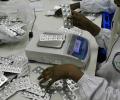
There are just 1,500 drug inspectors responsible for more than 10,000 factories in India
From zero revenues eight years ago, Lupin has posted Rs 621 crore (Rs 6.21 billion) in sales last year-that too in a country regarded as one of the toughest markets in the world for generics.

Drug major Sun Pharmaceutical Industries has acquired US-based Pharmalucence Inc for an undisclosed amount.

This is not just a Ranbaxy or Wockhardt problem, says K Satish Reddy

The Indian Pharmaceutical Alliance has approached regulator for a dialogue to understand the concern raised by it

DCGI, health ministry initiate dialogues with foreign regulators, try to understand global best practices
At a time when pharmaceutical companies are investing billions of dollars to develop new and path-breaking medicines, it is the old and heritage brands that continue to dominate the market. Sales in 2011 show that the average age of the top 10 pharma brands is 19.3 years, and some of them are as old as 25 years.

This move could cost $299 million a year for Indian pharma players.

Credit Suisse analysts cut their rating on Sun Pharma stock to 'neutral' from 'outperform

Over 550,000 small drug retailers in the country are transforming into producers and marketers of pharmaceutical products, readying to compete with companies such as Ranbaxy, Cipla, Sun Pharma and Lupin whose produce they sell.
The rupee's appreciation of 6.4 per cent against the dollar and 12 per cent against the euro is likely to hurt the first-quarter performance of the pharmaceutical sector, indicate a results' preview by broking houses.

The numbers are the highest ever in the history of domestic drug discovery initiatives triggered by companies such as Dr Reddy's and Ranbaxy over a decade ago.

Over the years, Mr Singh has got in and out of innumerable businesses, cutting across sectors. He is one businessman who I have always found to be in a start-up mode, says Bhupesh Bhandari.

Pharmaceutical patents are just over a fourth of all patents granted in the country, but domestic drug makers account for almost all post-grant patent opposition filed, official data reveals.
Hamdard University (Jamia Hamdard) announces its admission notice to the PhD Pharmaceutical Medicine Programme.
Ranbaxy, Dr Reddy's and other Indian drug makers may cut production as overseas buyers, hurt by the credit crunch, defer export orders. The move could also lower the country's drug exports by at least 10 per cent in the year ending March 2010, industry experts say."Many of our members have been intimated by their importers to stop shipments until further notice," said Venkat Jasti, chairman, Pharmaceutical Exports Promotion Council.
Multinational drug manufacturers such as Pfizer and DSM are increasingly getting into contract manufacturing alliances with emerging bulk drug makers in the country, bypassing established players such as Ranbaxy and Dr Reddy's.
Two years after India entered the product patents regime, the year 2007 saw Indian drug firms striving to shed the copycat image and become innovators with emphasis on research activities even as they resisted moves to include more medicines under price control.
Pharmaceutical majors like Ranbaxy, Dr Reddy's Lab, Wockhardt, Glenmark and Sun Pharma are now treading a careful patent litigation path in the US market to expand their generic business instead of the aggressive patent challenges they pursued until a few years ago.
Despite the ongoing trouble India's largest drug maker, Ranbaxy, is facing in the United States, domestic pharmaceutical companies are betting high on the world's largest drug market with added vigour.
Glenmark plans to start selling its anti-diarrhoea drug, Crofelemer, by the first-half of 2010 across the globe, except in North America, Europe, Japan and China, the company said. The confidence to sell the drug ahead of its rivals comes as the Crofelemer's original developer, Napo Pharmaceutical Inc, recently entered into a tie-up with a US-based drug maker, Salyx, for selling the drug in the US market, paving the way for Glenmark to sell it in the rest of the world.
While Daiichi Sankyo acquired a majority share in the country's biggest drug-maker Ranbaxy, Eisai and Astellas have chosen to set up wholly-owned subsidiaries to promote their patented medicines in the country. In a communication to the Nikkei Stock Exchange on November 18, Astellas said its subsidiary Astellas Pharma India in Mumbai was set up as a marketing arm to sell its immunology and urology medicines.
 © 2026 Rediff.com - Advertise with us - Disclaimer - Privacy Policy - Sitemap - Feedback - About us - Terms of use - Grievances